Planning update: September 2026
The typical 1500 sq ft roof cost ranges from $7,500 to $18,000 with asphalt shingles. However, material, pitch and roof complexity can significantly change the final price.
A 1,500-square-foot house does not always have a 1,500-square-foot roof. For example, pitch, overhangs and attached garages can increase the measured surface.
Therefore, homeowners should treat the home’s floor area as a starting point. A professional roof measurement provides a more reliable estimate.
Replacing the roof on a 1,500-square-foot house may cost $7,500 to $18,000 with common asphalt shingles. Meanwhile, a metal roof may cost $10,500 to $36,000. Deck repairs, steep slopes and complex rooflines can raise either estimate.
Average 1500 Sq Ft Roof Cost in 2027
The 1500 sq ft roof cost depends on the selected material and installation difficulty. Therefore, a basic one-story roof generally costs less than a steep or highly detailed roof.
Most standard asphalt-shingle replacements may cost approximately $7,500 to $18,000. Nevertheless, regional labor rates and permit requirements can change the total.
Estimated prices by project level
| Project level | Estimated price | Possible conditions |
|---|---|---|
| Lower-cost project | $7,500–$10,000 | Simple roof, basic shingles and limited repairs |
| Midrange project | $10,000–$14,000 | Architectural shingles and standard tear-off |
| Higher-cost project | $14,000–$18,000+ | Steep slope, complex roofline or premium shingles |
These amounts are planning ranges rather than guaranteed bids. Additionally, material availability and hidden damage can affect the price.
House Size Versus Roof Size
Why the two measurements are different
A home’s listed square footage measures interior living space. In contrast, roofing contractors measure the exterior roof surface.
A one-story rectangular home may have a roof close to its footprint. However, its pitch and overhangs still add surface area.
Additionally, an attached garage may not appear in the reported living area. Porches, additions and covered patios can also increase the roof.
Possible roof measurements by house design
| House configuration | Possible roof area | Why it differs |
|---|---|---|
| One-story, simple low pitch | 1,600–1,750 sq. ft. | Pitch and overhangs add surface area |
| One-story with garage | 1,800–2,200 sq. ft. | The garage may not count as living space |
| Two-story home | 900–1,200 sq. ft. | Living space is divided between two floors |
| Complex one-story design | 1,900–2,300+ sq. ft. | Wings, valleys and overhangs add area |
Roofing squares and material waste
Contractors commonly measure roofing in “squares.” Specifically, one roofing square equals 100 square feet of roof surface.
However, a contractor must order additional material for cuts and starter courses. This extra material is commonly called waste.
For example, a simple gable roof produces less waste than a roof with several valleys. Consequently, identical roof areas can require different material quantities.
1500 Sq Ft Roof Cost by Material
Roofing material creates the largest visible price difference. Asphalt shingles are usually the most affordable common option.
In comparison, metal, tile and slate require larger upfront budgets. However, some premium systems may provide longer service lives.
Price comparison by material
| Roofing material | Cost per sq. ft. | Estimated total |
|---|---|---|
| Basic asphalt shingles | $4–$7 | $6,000–$10,500 |
| Architectural shingles | $5–$10 | $7,500–$15,000 |
| Premium shingles | $8–$16+ | $12,000–$24,000+ |
| Metal roofing | $7–$24 | $10,500–$36,000 |
| Flat-roof membrane | $4–$14 | $6,000–$21,000 |
| Clay or concrete tile | $9–$25+ | $13,500–$37,500+ |
| Natural slate | $15–$35+ | $22,500–$52,500+ |
These calculations use exactly 1,500 square feet of roof area. Consequently, the estimate changes when that number describes the house instead of the roof.
Asphalt shingle roofing
Asphalt shingles offer the lowest upfront cost for many homes. Additionally, architectural shingles balance price, appearance and durability.
Premium designs cost considerably more than basic products. Nevertheless, upgraded impact ratings may be useful in hail-prone regions.
Metal roofing
Metal roofing generally has a higher initial cost. Exposed-fastener steel may sit near the lower end, while standing seam costs more.
Furthermore, copper, zinc and custom fabrication can exceed the range. Installer availability can also affect the final price.
Flat roofing membranes
A low-slope home or addition may use TPO, EPDM or PVC. However, the membrane price represents only one part of the assembly.
In particular, insulation and drainage corrections can increase the cost. Wet materials beneath the membrane may also require removal.
Materials and Labor Cost Breakdown
What the material price includes
The visible shingles represent only one part of a complete roof system. Therefore, material expenses usually include several components.
- Roofing shingles
- Starter shingles
- Hip and ridge caps
- Synthetic or felt underlayment
- Ice and water protection
- Drip edge and flashing
- Nails and sealants
- Intake and exhaust ventilation
What roofing labor includes
Labor commonly includes tear-off, preparation and installation. Additionally, the contractor must manage cleanup and waste disposal.
| Cost component | Approximate share | What it may include |
|---|---|---|
| Materials | 35%–45% | Shingles, underlayment, flashing and accessories |
| Labor | 40%–55% | Tear-off, preparation, installation and cleanup |
| Permits and overhead | 10%–20% | Permits, delivery, disposal and insurance |
Actual percentages vary by market and material. For instance, premium metal can shift more of the total toward materials and fabrication.
Factors That Change the 1500 Sq Ft Roof Cost
Roof pitch
A steep roof requires additional safety equipment. As a result, material handling and installation usually take longer.
Moreover, pitch increases the surface compared with the building footprint. Therefore, steep roofs require more material.
Roof complexity
A simple gable roof has only two primary planes. In contrast, hips, valleys and dormers require additional cutting and flashing.
Complex designs also produce more waste. Consequently, they often cost more than simple roofs of the same measured size.
Existing roofing layers
Removing one shingle layer is faster than removing several layers. Additionally, extra layers increase disposal weight and labor.
Local codes may limit roof overlays. Moreover, tear-off allows the contractor to inspect the underlying deck.
Height and accessibility
A one-story house with clear driveway access may cost less. Conversely, multiple stories and restricted access can slow the crew.
Landscaping and fences may also restrict delivery. Therefore, site conditions can affect the labor estimate.
Chimneys, skylights and vents
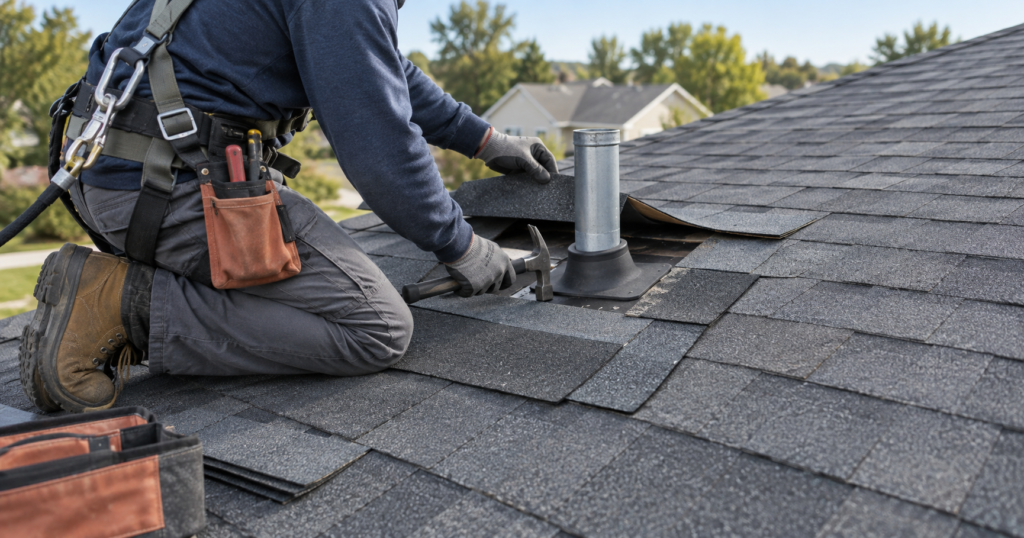
Every roof penetration requires careful detailing. For example, chimneys usually require more work than simple plumbing vents.
Additionally, deteriorated flashing should be replaced instead of covered. Although it adds cost, new flashing helps prevent future leaks.
Regional costs
Labor and permit expenses vary across the United States. Similarly, delivery costs can differ between metropolitan and rural areas.
Furthermore, severe-weather regions may require upgraded materials. Consequently, local building requirements can raise the total.
Roof-Deck Repair Costs
Why deck damage creates additional charges
Contractors cannot always see damaged decking before tear-off. Consequently, many proposals list deck replacement separately.
Moisture can weaken plywood or oriented strand board. Additionally, previous leaks may damage rafters, insulation or fascia.
Signs of possible roof-deck damage
- Soft or visibly sagging roof sections
- Repeated leaks in the same area
- Water stains inside the attic
- Rot near eaves, valleys or chimneys
- Delaminated or weakened sheathing
Should You Repair or Replace the Roof?
When roof repair may be enough
Repair may be reasonable when damage is isolated. For example, a few missing shingles may not justify complete replacement.
However, the remaining roof should still be in serviceable condition. Otherwise, the repair may provide only temporary value.
When replacement may be more practical
Widespread deterioration can make repeated repairs inefficient. Additionally, an aging roof with several leaks may need a complete solution.
- The roof is near the end of its expected service life.
- Deterioration appears across several slopes.
- Leaks occur in multiple unrelated areas.
- Previous repairs continue to fail.
- Large areas of decking need repair.
- The homeowner wants a different roofing material.
How to Estimate Your 1500 Sq Ft Roof Cost
Calculate the preliminary price
First, determine whether 1,500 square feet describes the home or roof. Next, obtain an accurate roof measurement.
Then, multiply the measured surface by an appropriate installed price. However, use a range instead of relying on one exact number.
Example calculation
For example, assume a 1,500-square-foot house has a 1,750-square-foot roof. Architectural shingles cost $7 per square foot.
Afterward, add separately priced repairs and permits. Finally, include a contingency for hidden conditions.
How to Compare Roof Replacement Quotes
Information every quote should include
Obtain at least three written estimates with the same scope. Otherwise, the lowest proposal may exclude important components.
- The measured roof area and number of roofing squares
- The product line and material specifications
- Underlayment, flashing and ventilation components
- The number of existing layers being removed
- Waste-container and disposal charges
- Deck-repair unit prices
- Permit responsibilities
- Material and workmanship warranties
- Payment schedule
- Estimated start and completion dates
Contractor verification
Additionally, verify licensing and insurance requirements in your state. Ask for recent references involving the proposed roofing system.
Finally, avoid comparing estimates solely by price. Instead, confirm that every contractor proposes a complete and comparable system.
Frequently Asked Questions
What is the average 1500 sq ft roof cost?
The typical 1500 sq ft roof cost ranges from approximately $7,500 to $18,000 with asphalt shingles. However, premium materials and complex roofs can cost more.
How many roofing squares cover a 1,500-square-foot roof?
A 1,500-square-foot roof contains 15 roofing squares. Nevertheless, contractors order additional material for cuts and waste.
How much do shingles cost for a 1,500-square-foot roof?
Installed asphalt shingles may cost $6,000 to $24,000. Basic products fall near the lower end, while premium shingles cost more.
Does a 1,500 sq ft house have a 1,500 sq ft roof?
Not necessarily. For instance, pitch, overhangs and garages can increase the surface. Meanwhile, a two-story house may have a smaller footprint.
How long does replacement take?
A straightforward asphalt-shingle project may take one to three days. However, weather and deck repairs can extend the schedule.
Does insurance pay for roof replacement?
Insurance may cover sudden damage caused by a covered event. However, policies generally exclude age, wear and neglected maintenance.
Methodology
Home Fix Ledger developed these ranges using cost information published through September 2026. Additionally, we compared material-specific prices from our roofing guides.
The 2027 figures are forward-looking planning estimates. Therefore, they are not observed 2027 invoices or guaranteed bids.