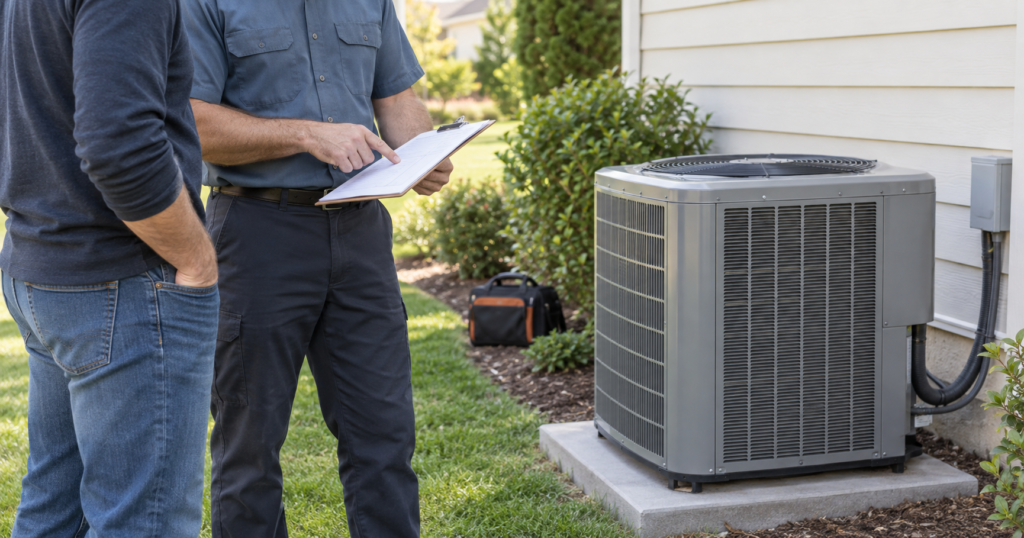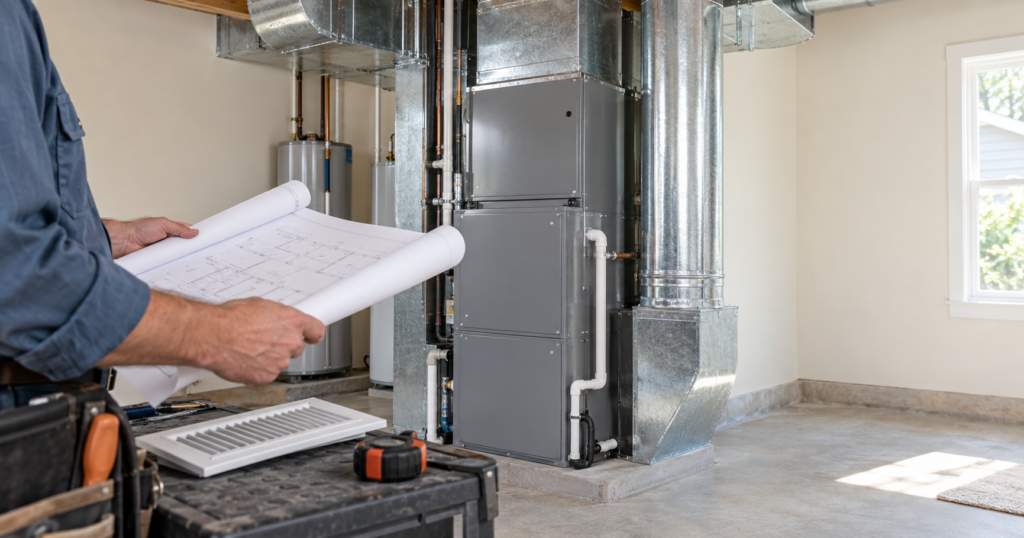
AC replacement cost varies with the equipment and installation scope. HomeGuide publishes an installed benchmark of $5,000 to $8,300 for standard-efficiency central AC replacement.
However, premium equipment and additional installation work can raise the total substantially. This guide focuses on replacing central air conditioning in a home that already has a cooling system.
AC Replacement Cost by Equipment Level
HomeGuide groups its published estimates into the following tiers. Its comparison assumes a 2,000-square-foot home and excludes ductwork modifications or replacement.
| Published equipment tier | Installed benchmark | Important limitation |
|---|---|---|
| Entry-level | $5,000–$8,300 | Property-specific requirements may change the price. |
| Mid-range | $8,300–$12,500 | Compare exact models and included features. |
| High-end | $12,500–$14,000+ | The upper figure is not a project price ceiling. |
Source: HomeGuide — AC replacement cost, accessed September 2026. The page lists a July 2025 editorial date.
These are published planning benchmarks, not a local quote survey. In particular, equipment tiers are not standardized packages across contractors.
What Does AC Replacement Include?
Outdoor equipment and indoor components
“New AC” can describe different scopes. One proposal may include an outdoor condenser and indoor coil, while another may include an air handler.
Therefore, request every model number in writing. Ask which existing components remain and how their compatibility will be confirmed.
Installation and startup work
Ask the contractor to describe equipment removal, connections and final testing. Also, confirm whether controls and any necessary installation materials are included.
A proposal should explain the completed system, not simply identify the outdoor equipment brand.
AC replacement versus full HVAC replacement
Replacing cooling equipment does not automatically include a new furnace or other heating equipment. Consequently, compare these projects separately.
Our HVAC replacement cost guide explains the broader scope. Published ranges from different sources or dates should not be treated as a single price list.
What Changes AC Replacement Cost?
Required cooling capacity
Ask how the contractor determined the proposed capacity. Copying the old unit’s size may overlook changes to the home or an earlier sizing problem.
Furthermore, ask whether a load calculation is included. A floor-area rule alone should not replace an assessment of the building.
Ductwork and airflow
Have the contractor explain whether existing ducts can support the proposed system. If changes are recommended, request the findings behind them.
For example, ask whether the work addresses leakage, restricted airflow or distribution problems. Then separate that scope from the equipment price.
Access and equipment location
A tight indoor closet or difficult outdoor access can change the installation plan. Similarly, removing old equipment may require additional arrangements.
Ask the installer to identify access-related work during the site visit. This reduces uncertainty before signing the proposal.
Electrical and drainage work
Request an explanation of any electrical, condensate-drain or equipment-support modifications. Do not assume that every replacement needs the same upgrades.
Also, confirm who performs each task and whether its price is included. A vague allowance deserves clarification.
Controls and optional accessories
A thermostat, service plan or accessory may appear within the total. Therefore, ask which items are necessary and which are optional.
Compare the base system first. Then evaluate extras according to the problem they are intended to solve.
Is a More Efficient AC Worth the Higher Price?
A higher efficiency rating can reduce electricity use under comparable conditions. However, actual savings depend on climate, usage, energy rates and installation.
The Department of Energy evaluates efficiency premiums against operating savings in its central air-conditioning guidance.
Request assumptions behind savings claims
Ask which electricity rate and cooling usage support the estimate. Also, confirm that the comparison uses the specific equipment combinations offered.
A generic savings percentage does not tell you what will happen in your home.
A hypothetical payback example
Suppose a higher-efficiency option costs $1,500 more and is estimated to save $150 annually. Simple payback would be 10 years.
These figures are illustrative. The calculation excludes financing, maintenance differences and changing energy prices; it does not guarantee actual savings.
Installation quality still matters
DOE identifies oversizing, improper refrigerant charging and leaky ducts as installation problems that can reduce performance. Consequently, equipment ratings alone do not establish the final result.
Ask how startup testing will be documented before the system is handed over.
How to Compare AC Replacement Cost Quotes
Request two or three proposals with clearly defined scope. Then compare the following items rather than focusing only on the headline total.
| Item | What to confirm |
|---|---|
| Equipment | Outdoor and indoor model numbers |
| System sizing | Basis for the selected capacity |
| Retained components | Compatibility and condition |
| Ductwork | Included testing, repairs or modifications |
| Additional work | Electrical, drainage, supports and controls |
| Completion | Removal, cleanup and startup documentation |
| Coverage | Equipment warranty and separate workmanship terms |
| Price | Cash total, exclusions and financing terms |
Clarify allowances before approving work
If a proposal lists an allowance, ask what it covers and how overruns require approval. Likewise, request written pricing for known additional work.
Keep a copy of the final scope and any changes made during installation.
Should You Repair the Existing AC Instead?
A cooling problem does not automatically justify replacement. First, request a diagnosis and an explanation of the failed component.
Next, compare what the repair restores with what replacement provides. Ask whether unresolved airflow or comfort problems would remain under either option.
- What testing supports the diagnosis?
- What is included in the repair?
- Are other problems already documented?
- What equipment would replacement retain?
- Would either option require ductwork changes?
If you are considering replacing heating equipment too, compare the complete proposal with our guide to full HVAC replacement.
Ways to Keep the Project Within Budget
Separate financing from equipment selection
Monthly payments can make different proposals look similar. However, the cash price, interest and fees determine the total financial commitment.
Request both the cash total and the total of scheduled payments before comparing offers.
Verify discounts and incentives
Ask the program administrator whether your exact equipment and installation qualify. Confirm timing and documentation requirements before subtracting any incentive from your budget.
Also, compare the final price after discounts. A larger advertised discount does not necessarily produce a lower installed cost.
Pay for documented needs
Ask what problem each recommended upgrade corrects. For example, a duct modification should have a clear purpose related to the proposed installation.
This approach helps distinguish necessary work from optional features without automatically choosing the cheapest package.
AC Replacement Cost FAQs
How much does central AC replacement cost?
The published entry-level benchmark above is $5,000 to $8,300 installed. Higher-tier equipment and additional work can increase the total substantially.
Can I replace only the outdoor AC unit?
Ask the contractor to verify compatibility with the retained indoor equipment. A lower initial price is not enough to establish that the proposed combination is suitable.
Does AC replacement include a furnace?
Not automatically. Request a component list and distinguish cooling replacement from a complete heating-and-cooling project.
Will a new AC solve uneven room temperatures?
Not necessarily. Ask whether the assessment identified airflow, ductwork or building-related causes that equipment replacement alone would leave unresolved.
Why is my quote above the published range?
Ask which equipment and installation tasks explain the difference. Published benchmarks cannot account for every local market or property-specific requirement.
Methodology and Sources
Cost benchmarks come from HomeGuide’s dedicated AC replacement guide. Home Fix Ledger has not independently collected local contractor quotes for this article.
Technical context comes from Department of Energy guidance. Hypothetical calculations are labeled and should not be treated as savings forecasts.