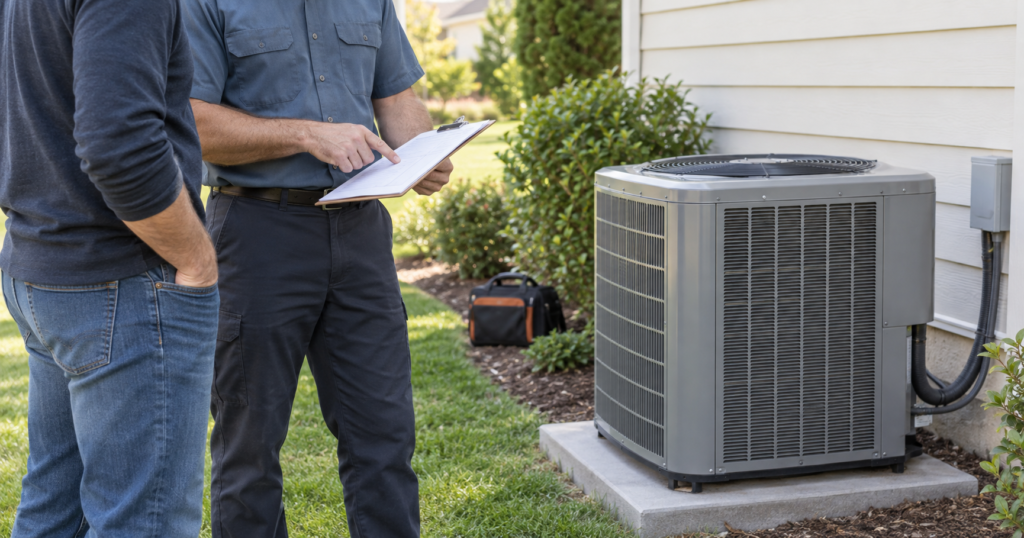
Central air installation cost depends on how much cooling infrastructure your home already has. Adding air conditioning to usable ducts is a different project from installing equipment, ducts and room vents from scratch. Therefore, start by identifying which type of installation your quote covers.
HomeGuide publishes installed benchmarks of $5,300–$10,500 for central air conditioning and $9,000–$16,000 for central air conditioning with ductwork. These are broad planning ranges from its July 2025 guide, reviewed here in September 2026. A first-time retrofit needs a site-specific quote.
Before choosing a contractor, confirm whether the total includes electrical work, indoor equipment, drainage and repairs to finished surfaces.
Central Air Installation Cost Benchmarks
The following figures come from the same published cost table. However, the source covers installation and replacement scenarios together. Use the ranges to frame your budget, then request a written scope for your particular home.
| Project scope | Published installed range | What to clarify |
|---|---|---|
| Central air conditioning | $5,300–$10,500 | Which existing components will remain? |
| Central air conditioning with ductwork | $9,000–$16,000 | Does the duct scope serve every intended room? |
Source: HomeGuide’s AC installation and replacement cost guide, dated July 25, 2025. These figures are not local bids or a guaranteed price ceiling.
Installing Central Air With Existing Ducts
If your home has forced-air heating, ask the installer to evaluate the existing distribution system. The proposal should explain which ducts and indoor components will stay.
Next, request a written list of any changes. For example, distinguish a limited adjustment from replacing entire duct runs. This makes competing proposals easier to compare.
Questions for the initial visit
- Which rooms will the proposed system serve?
- What existing equipment can remain, and why?
- Where will the indoor cooling components fit?
- Which airflow checks will you perform?
- How will you document any required duct changes?
Central Air Installation Cost Without Existing Ducts
For a home without ducts, request a layout showing supply vents, return locations and equipment placement. Also, ask the contractor to mark any proposed openings in walls or ceilings.
Before approving the layout, consider how it affects closets, storage and visible living areas. A walkthrough can reveal concerns that a one-line estimate misses.
Clarify who restores the house
Ask whether the HVAC contractor handles drywall, trim and paint. If another trade will finish those surfaces, obtain that estimate before comparing the total project price.
Similarly, identify who moves stored belongings and protects finished floors. Put these responsibilities in writing so the construction schedule has fewer gaps.
What Should a Central Air Installation Quote Include?
Use the checklist below to request a complete proposal. For each item, ask the contractor to mark it as included, excluded or unnecessary for your home.
- Equipment: Outdoor and indoor model numbers, controls and accessories.
- Duct scope: New runs, retained sections, returns and room registers.
- Electrical scope: Connections and any separately quoted electrical work.
- Drainage: The proposed route and included components.
- Site preparation: Equipment support, access and surface protection.
- Administrative items: Responsibility for applicable permits and inspections.
- Finishing: Debris removal and restoration of opened surfaces.
- Handover: Startup records, operating instructions and warranty documents.
Additionally, request the process for approving extra work. An allowance should state what it covers and how the final charge will be calculated.
Equipment Size and Efficiency Affect the Decision
A larger unit does not automatically deliver better results. The U.S. Department of Energy identifies oversizing, incorrect refrigerant charge and leaking ducts as installation problems that can reduce performance and equipment life.
Therefore, ask the installer to explain the proposed capacity and the checks used to support it. Request the reasoning before accepting an upgrade based only on a larger model number.
Compare efficiency using clear assumptions
SEER2 is a cooling efficiency rating. However, the value of a higher-efficiency model depends on its additional price and your actual operating conditions.
Ask for the electricity rate, estimated usage and comparison model behind any savings claim. Without those assumptions, a promised monthly saving is difficult to evaluate.
Technical reference: U.S. Department of Energy guidance on central air conditioner efficiency and installation.
How to Compare Central Air Installation Cost Quotes
First, give each contractor the same brief: rooms to serve, preferred equipment locations and any planned renovations. Then compare the written proposals side by side.
Next, separate differences in equipment from differences in construction. A lower total might exclude finishing work that another proposal includes.
Use a simple comparison sheet
- Record the total price before optional additions.
- List the equipment models and included work.
- Identify exclusions and unresolved allowances.
- Note the proposed start date and completion conditions.
- Compare labor warranty terms and follow-up arrangements.
Finally, ask for a revised proposal when an important item is unclear. Keep the final written version with your installation records.
Frequently Asked Questions
Does the installation price include a furnace?
Check the equipment list. Do not assume an AC quote includes a new furnace. Ask the contractor to identify which heating components remain and which components are being replaced.
Can I use the published range as my final budget?
Use it as an initial reference. Before committing, obtain a site-specific proposal and prices for any excluded work. This is especially useful when the installation involves finished walls or ceilings.
How do I compare central air with a ductless proposal?
Request proposals covering the same rooms and comfort goals. Then compare equipment placement, construction scope, controls and maintenance access. Otherwise, the totals may describe different levels of coverage.
What should I receive when installation is complete?
Request the final equipment list, warranty information, startup documentation and operating instructions. Also, confirm who to contact if a room does not perform as expected after the system begins operating.
Reviewed September 2026. Price benchmarks are attributed to HomeGuide’s July 2025 publication; HomeFixLedger did not conduct an independent contractor-price survey. Technical guidance draws on the U.S. Department of Energy. The quote checklists are editorial tools for organizing proposals. Actual scope and pricing require an assessment of the property.