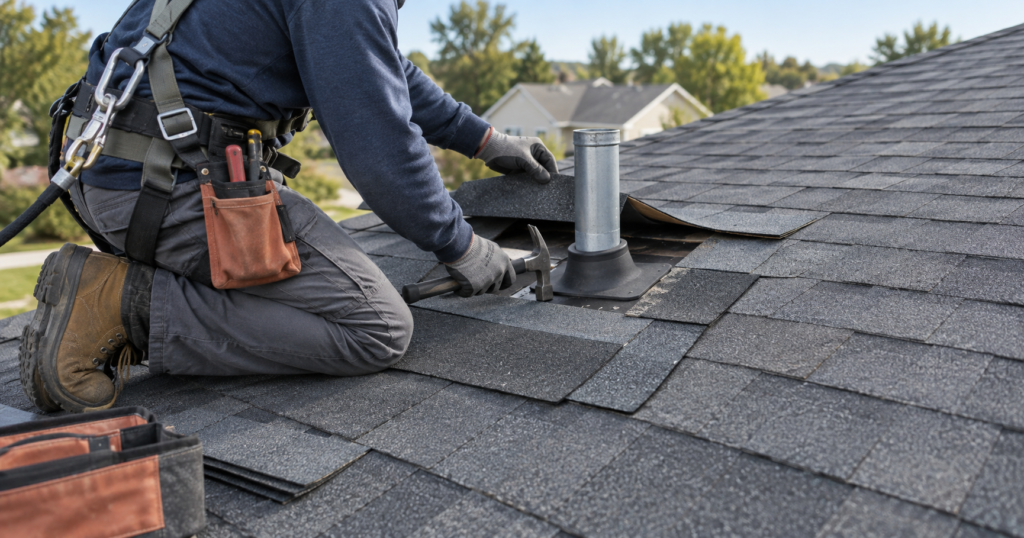
Roof vent replacement cost typically ranges from $200 to $700 per vent, including basic materials and professional installation. However, replacing a ridge vent or powered attic fan can cost between $400 and $2,000.
The final price depends on the vent style, roof pitch, installation difficulty and surrounding roof damage. Therefore, a simple box vent replacement costs much less than rebuilding a full ridge ventilation system.
Average Roof Vent Replacement Cost in 2027
The average roof vent replacement cost falls between $200 and $700 for one standard passive vent. This estimate generally includes removal, a replacement vent, flashing, sealant and labor.
Nevertheless, the project may cost less when a roofer replaces several vents during a scheduled roof installation. The crew is already on-site, and the surrounding shingles are already being removed.
By contrast, a standalone service call can carry a higher cost per vent. Roofers must provide transportation, fall protection, setup and cleanup for a relatively small repair.
| Project | Typical cost | Common scope |
|---|---|---|
| Minor vent repair | $100–$350 | Resealing, replacing fasteners or repairing flashing |
| Standard roof vent replacement | $200–$700 | Removal and replacement of one passive vent |
| Multiple passive vents | $500–$1,500 | Replacement of several box or static vents |
| Ridge vent replacement | $400–$1,500 | Vent material, ridge-cap shingles and labor |
| Powered or solar vent | $500–$2,000 | Vent, installation and possible electrical work |
These figures are planning ranges rather than fixed contractor quotes. Local wages, roof conditions and permit requirements can change the final price.
Roof Vent Replacement Cost by Vent Type
Vent type is one of the biggest pricing factors. Passive vents are usually the least expensive because they contain no motor, wiring or moving components.
| Vent type | Installed replacement cost | Best suited for |
|---|---|---|
| Box or static vent | $200–$600 each | Simple passive exhaust ventilation |
| Roof turbine | $250–$750 each | Wind-assisted attic exhaust |
| Ridge vent | $7–$15 per linear foot | Balanced ventilation along the roof peak |
| Powered attic vent | $400–$1,200 each | Mechanical removal of hot attic air |
| Solar roof vent | $500–$2,000 each | Powered ventilation without new utility use |
| Plumbing vent boot | $150–$500 each | Sealing around a plumbing vent pipe |
Box or static vent replacement
A box vent replacement generally costs $200 to $600. The roofer removes the shingles around the old unit and inspects the opening for moisture damage.
Next, the contractor installs the new vent with flashing and roofing fasteners. Finally, the surrounding shingles are restored to direct water away from the opening.
Roof turbine replacement
Replacing a wind turbine usually costs $250 to $750. Basic models remain relatively affordable. However, larger metal units and difficult roof access can raise the total.
A noisy turbine may only need lubrication or a small component repair. Still, a bent, rusted or unstable turbine often makes full replacement more practical.
Ridge vent replacement
Ridge vent work commonly costs $7 to $15 per linear foot. As a result, a 40-foot ridge may cost approximately $280 to $600 before extensive shingle repairs.
Complete projects often total $400 to $1,500. The contractor may need to remove ridge-cap shingles, correct the roof opening and install new cap shingles.
Powered attic vent replacement
A powered attic fan can cost $400 to $1,200 to replace. Furthermore, electrical repairs or a new thermostat can add to the total.
Before selecting a powered vent, ask whether the home has enough intake ventilation. Otherwise, the fan may pull conditioned air from the living space instead of drawing air through the soffits.
Solar roof vent replacement
Solar vent replacement usually costs $500 to $2,000. Although the unit does not require standard household power, the equipment itself is more expensive.
Higher-priced units may include a larger solar panel, thermostat, battery or humidity controller. Therefore, compare specifications instead of focusing only on the vent’s exterior size.
Plumbing vent boot replacement
A plumbing vent boot is not an attic exhaust vent. Instead, it seals the area where a plumbing pipe passes through the roof.
Replacing this boot usually costs $150 to $500. If water has damaged the nearby sheathing, review our guide to roof decking replacement cost.
Labor and Material Costs
Materials may represent only a small portion of the final bill. Roofing labor, safety equipment and the contractor’s minimum service charge can cost more than the vent itself.
Roof vent materials
A basic passive vent may cost $20 to $150 before installation. Turbines commonly cost more, while powered and solar models can cost several hundred dollars.
In addition, the project may require shingles, flashing, underlayment, sealant and corrosion-resistant fasteners. These supporting materials help create a watertight installation.
Professional labor
Roofing labor often ranges from $75 to $150 per hour. However, many contractors price small roof projects using a minimum service charge instead of an hourly rate.
Consequently, replacing one inexpensive vent might still cost several hundred dollars. The quote covers travel, setup, roof access, safety procedures and cleanup.
Electrical work
Powered vents may require a licensed electrician. Electrical work can add $150 to $500, depending on the wiring, controls and local labor rates.
However, a direct replacement using safe existing wiring may cost less. Ask whether the roofing estimate includes electrical connections before approving the job.
What Changes Roof Vent Replacement Cost?
The vent itself is only one part of the estimate. Roof design and existing damage can have a larger effect on the final bill.
Roof pitch and accessibility
A steep roof requires additional safety equipment and more installation time. Likewise, roofs with limited driveway or yard access may take longer to reach.
Complex roofs also increase labor. Dormers, valleys and multiple roof levels can make a seemingly simple vent replacement more difficult.
Roofing material
Asphalt shingles are generally easier to repair around a vent. By comparison, metal, slate, wood shake and tile roofs require specialized techniques.
Matching older roofing materials may also raise the price. In some cases, the contractor must replace a larger surrounding area to produce a reliable repair.
Water-damaged decking
A leaking vent can allow water to reach the roof sheathing. Soft or deteriorated decking must be removed before the new vent is installed.
Minor decking repairs may add $100 to $500. Extensive deterioration can cost much more, especially when moisture has reached rafters or attic insulation.
Damaged shingles and flashing
Nearby shingles may crack during removal, particularly when they are old or brittle. Therefore, the roofer may include several replacement shingles in the estimate.
Damaged flashing also needs correction. Simply applying sealant over deteriorated metal rarely provides a durable repair.
Number of vents
The total project cost increases with each vent. Nevertheless, the cost per vent may decrease when several units are replaced during the same visit.
Ask for both the individual price and the combined project price. This comparison shows whether replacing aging vents together provides meaningful savings.
Emergency service
Weekend, storm-response and urgent leak visits usually cost more. Temporary protection may also appear as a separate charge.
If water is entering the home, review our guide to roof leak repair cost before comparing broader repair options.
Should You Repair or Replace a Roof Vent?
Repair can make sense when the vent remains structurally sound. For example, a roofer may replace loose fasteners, renew sealant or correct a small flashing defect.
However, replacement is usually better when the vent is cracked, heavily rusted or poorly sized. It may also be necessary when the surrounding flashing repeatedly leaks.
| Condition | Likely solution | Typical cost |
|---|---|---|
| Loose fasteners or minor seal failure | Repair or reseal | $100–$300 |
| Small flashing defect | Repair flashing | $150–$500 |
| Cracked or rusted vent | Replace vent | $200–$700 |
| Failed motor or controls | Repair or replace powered unit | $250–$1,200 |
| Repeated leaks and damaged decking | Replace vent and damaged materials | $500–$1,500+ |
Consider the roof’s remaining life as well. If replacement is approaching, coordinating the vent work with the larger project may prevent duplicated labor.
Signs That a Roof Vent Needs Replacement
Visible leaks are not the only sign of vent failure. Poor ventilation can also contribute to heat and moisture problems inside the attic.
- Water stains appear near a vent opening.
- The vent housing is cracked, bent or rusted.
- Flashing has lifted away from the shingles.
- A turbine wobbles, stops turning or makes noise.
- A powered fan no longer starts correctly.
- The attic feels unusually hot or humid.
- Condensation appears on nails or roof sheathing.
- Mold or musty odors develop in the attic.
- Shingles around the vent are damaged or missing.
Some of these symptoms can have several causes. For instance, attic moisture may result from blocked soffit vents, bathroom exhaust discharge or air leaks from the home.
For that reason, request an inspection before replacing equipment. A broader diagnosis can prevent spending money on a vent that was not the underlying problem.
Choosing the Right Roof Ventilation System
Effective attic ventilation normally requires both intake and exhaust. Soffit vents commonly provide intake air, while roof or ridge vents allow warmer air to escape.
Adding exhaust vents without adequate intake may not correct the problem. In fact, an unbalanced system can perform poorly even when every individual vent is new.
Check the ventilation balance
A roofing professional can calculate ventilation needs using attic floor area and the vent products’ net free area. Building requirements and manufacturer instructions should guide the final design.
Additionally, exhaust vents should not compete with one another. Combining a ridge vent with powered exhaust can change airflow patterns and reduce performance.
Match the vent to the roof
A long, simple roof ridge may work well with continuous ridge ventilation. Conversely, a complex roof with short ridge sections may need properly placed static vents.
Local climate also matters. Wind-driven rain, wildfire exposure, snow and coastal corrosion may affect which products are appropriate.
How to Save on Roof Vent Replacement
Start by obtaining two or three itemized estimates. Each quote should separate the vent, roofing materials, labor and any decking repairs.
Next, ask whether several aging vents can be replaced during one visit. Bundling the work may reduce repeated service and setup costs.
Scheduling the project with other roof repairs may also help. For example, a contractor can address damaged shingles and vent flashing during the same appointment. Our roof repair cost guide explains common repair pricing.
Nevertheless, avoid choosing a replacement vent solely because it has the lowest purchase price. Proper sizing and installation matter more than small differences in material cost.
- Compare itemized contractor estimates.
- Replace multiple failing vents during one visit.
- Schedule nonurgent work before severe weather seasons.
- Coordinate vent replacement with other roof repairs.
- Verify warranties for both materials and workmanship.
- Keep attic intake vents clear after installation.
Questions to Ask a Roofing Contractor
A detailed conversation can reveal whether the estimate covers the complete project. Therefore, ask these questions before signing a contract:
- Does the roof vent replacement cost include removal and disposal?
- Will you replace the flashing and surrounding shingles?
- How will you inspect the roof decking below the vent?
- Does the attic have enough intake ventilation?
- Will the new vent interfere with other exhaust vents?
- Does the project require electrical or permit work?
- What product and workmanship warranties apply?
- How will additional hidden damage be priced?
Also, confirm that the contractor carries appropriate licensing and insurance where required. Documentation requirements vary by state and locality.
Frequently Asked Questions
How much does it cost to replace one roof vent?
Replacing one standard passive roof vent generally costs $200 to $700. The price may increase if the roof is steep or the surrounding decking needs repair.
How much does ridge vent replacement cost?
Ridge vent replacement commonly costs $400 to $1,500. Roof length, ridge-cap shingles and corrections to the existing opening affect the total.
Can a leaking roof vent be repaired?
Yes. Loose fasteners, minor seal failures and limited flashing defects may be repairable. However, cracked or heavily rusted vents usually need replacement.
Does a roofer or HVAC contractor replace roof vents?
A roofer normally replaces passive roof vents and repairs surrounding shingles. Powered units may also require an electrician or qualified ventilation contractor.
Does homeowners insurance cover a damaged roof vent?
Coverage may apply when a covered sudden event damages the vent. Insurance generally does not cover deterioration, poor maintenance or installation defects.
How long does roof vent replacement take?
A straightforward single-vent replacement may take one to three hours. Multiple vents, steep roofs and hidden water damage can extend the project.
Can roof vents be replaced without replacing the roof?
Yes. A roofer can carefully remove the surrounding shingles and install a new vent. However, brittle or discontinued shingles can complicate the repair.
Is a ridge vent better than box vents?
Neither option is automatically better for every roof. Ridge vents work well on suitable roof designs, while box vents may suit roofs with limited ridge length.
Bottom Line
The typical roof vent replacement cost ranges from $200 to $700 for a standard passive vent. Ridge vent projects commonly cost $400 to $1,500, while powered or solar units may reach $2,000.
However, the lowest quote may not represent the full repair. Confirm that the contractor will inspect the decking, replace damaged flashing and restore the surrounding roofing materials.
Finally, treat ventilation as a complete system. Balanced intake and exhaust can protect the attic more effectively than replacing a single vent without diagnosing the underlying airflow problem.
Methodology
Home Fix Ledger develops planning ranges by comparing published home-improvement cost guides, roofing manufacturer guidance and common contractor pricing structures. Figures include typical U.S. material and labor costs but do not represent a contractor quote.
Actual prices vary by location, roof design, product specifications and hidden damage. Obtain local written estimates before making a financial decision.