HVAC • Cooling Troubleshooting
Is your AC not cooling even though you hear it running? Moving air does not always mean the system is removing heat. The indoor blower may operate while another part of the cooling system has stopped working.
Start with a few simple observations. Thermostat settings, airflow restrictions, frozen coils, and outdoor-unit problems can produce similar symptoms, but they require different solutions.
Check the thermostat, an accessible filter, and blocked vents first. Then observe the outdoor unit from a safe distance. If you see ice, smell burning, or find a tripped breaker, stop troubleshooting and arrange professional service. Do not open electrical compartments or handle refrigerant.
AC Not Cooling: What to Check First
Before changing anything, note the indoor temperature, thermostat setting, and whether air reaches several rooms. Also record when the problem began. A sudden failure and a long-standing comfort problem provide different clues.
| What you notice | Possible explanation | Next step |
|---|---|---|
| Air moves, but feels warm | Fan setting or inactive cooling components | Check COOL mode and fan AUTO |
| Weak airflow in several rooms | Restricted filter, airflow problem, or ice | Inspect accessible filter and vents |
| Visible ice on refrigerant tubing | Frozen evaporator or related fault | Turn cooling off and call for service |
| Outdoor unit stays quiet during a cooling call | Power, control, or component problem | Arrange professional diagnosis |
| Cooling struggles mainly during peak heat | Capacity, airflow, or building-related limitation | Request a system assessment |
Seven Possible Causes of Poor Cooling
1. The thermostat is not calling for cooling
First, confirm the thermostat is in COOL mode and the target temperature is below the current room temperature. Select AUTO for the fan while checking the problem.
With the fan set to ON, the blower may circulate room-temperature air between cooling cycles. Therefore, fan noise alone does not confirm active cooling.
If the display is blank, follow the thermostat manual’s battery instructions where applicable. Also check whether a schedule changed the temperature setting.
2. A dirty filter or blocked vent restricts airflow
A clogged filter can limit airflow. Start with an accessible filter, following your equipment’s shutdown and replacement instructions. Use the specified size and an approved filter type.
Next, move furniture or curtains away from return grilles and supply registers. Do not remove equipment panels to reach unfamiliar components.
For ongoing care, our HVAC maintenance cost guide explains what to consider when budgeting for service.
3. The evaporator coil has frozen
Visible ice on refrigerant lines, unusually weak airflow, or water appearing as ice melts can indicate a frozen coil. Restricted airflow and refrigerant problems are possible causes.
Turn the thermostat from COOL to OFF and contact an HVAC professional. Do not chip the ice or apply direct heat to the equipment.
Thawing alone does not identify the cause. Tell the technician where you saw ice and whether the filter was dirty. Trane warns that continued operation with a frozen coil can damage the system.
4. The outdoor condenser cannot release heat effectively
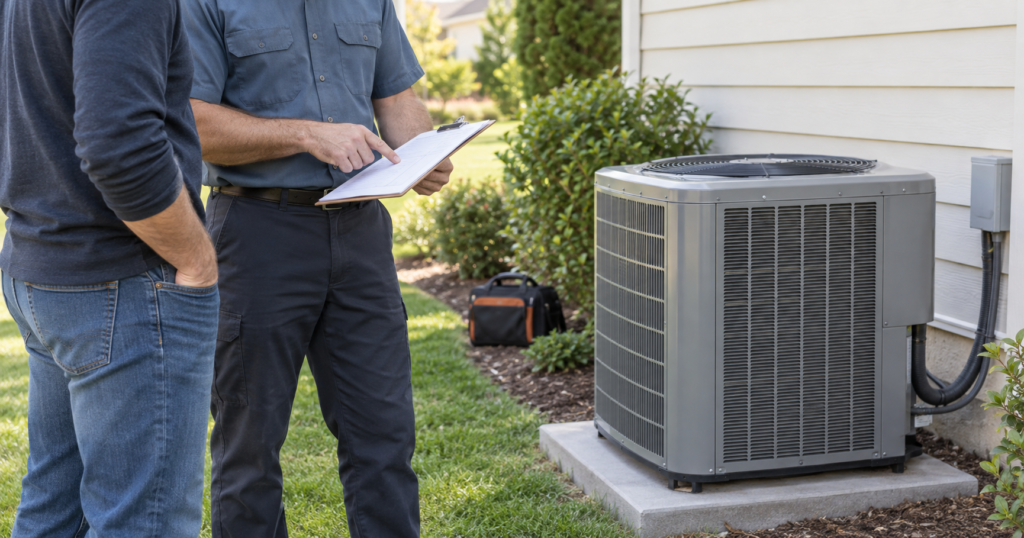
The outdoor coil releases heat collected inside your home. Dirt buildup and crowded vegetation can interfere with its operation, reducing cooling performance.
Look for plants or loose debris crowding the unit without reaching through the grille. Maintain the clearance specified by the manufacturer.
Leave internal cleaning to a technician. In particular, avoid pressure washers: strong water pressure can damage delicate coil fins. Trane recommends professional coil inspection and cleaning as part of maintenance.
5. Refrigerant is low
Low refrigerant can reduce cooling and contribute to freezing. A leak or an incorrect initial charge may explain the problem; the symptoms alone cannot confirm it.
Ask the technician what testing supports the diagnosis and whether a leak needs repair. Repeated refrigerant additions without investigating the cause can leave the underlying problem unresolved.
Do not connect gauges or attempt a recharge yourself. Refrigerant work belongs with a qualified professional.
6. The compressor or an electrical component is not operating
The indoor fan can run even when the outdoor compressor does not. Also, a spinning outdoor fan does not prove the compressor is operating correctly.
Potential causes include a capacitor fault, wiring issue, power problem, or compressor failure. These require testing, not a diagnosis based on sound alone.
If you find a tripped breaker, leave it for professional evaluation. Do not open electrical panels on the unit. Our AC capacitor replacement cost guide provides budgeting context after a confirmed diagnosis.
7. The system cannot meet the home’s cooling demand
If your AC has always struggled during hot afternoons, ask about equipment capacity, duct performance, and insulation. Trane identifies improper sizing as one possible reason a running system cannot lower indoor temperature.
However, do not assume you need a larger unit. Request a professional assessment before changing equipment size, especially if your home previously cooled comfortably.
When Should You Call an HVAC Professional?
Stop and seek help: Turn the system off if you notice a burning smell, visible ice, or serious unusual noise. Avoid wet equipment and exposed wiring. If there is smoke or fire, leave the area and contact emergency services.
Otherwise, arrange service if basic thermostat, filter, and vent checks do not restore cooling. Do not repeatedly restart the system to see whether the problem disappears.
- When cooling changed and whether the problem is constant.
- Indoor temperature and thermostat settings.
- Whether airflow is weak throughout the home or in one room.
- Any visible ice, water, unusual sounds, or thermostat alerts.
- Recent maintenance, repairs, and filter changes.
What Will It Cost to Restore Cooling?
“Running but not cooling” describes a symptom rather than a repair. Consequently, a meaningful estimate requires identifying the cause.
Before booking, ask about the diagnostic fee and any after-hours charge. After testing, request an itemized repair estimate and confirmation of warranty coverage.
Our HVAC repair cost guide offers budgeting context. If the diagnosis involves a major repair, compare your options using AC repair versus replacement. One cooling failure does not automatically justify replacing the system.
Frequently Asked Questions
Why is the fan running but the air is warm?
The fan may be set to ON, or cooling components may not be operating. Check the thermostat first, then arrange service if the problem continues.
Does ice always mean low refrigerant?
No. Restricted airflow can also cause freezing. Turn cooling off and have the cause diagnosed rather than assuming a refrigerant recharge will fix it.
Should I keep lowering the thermostat?
No. A lower setting will not repair an AC not cooling because of a mechanical fault. Record the current readings and investigate the cause.
Sources and Editorial Method
This guide uses manufacturer troubleshooting resources to distinguish basic observations from professional repairs. Symptoms can overlap, so the checklist does not replace an equipment diagnosis.