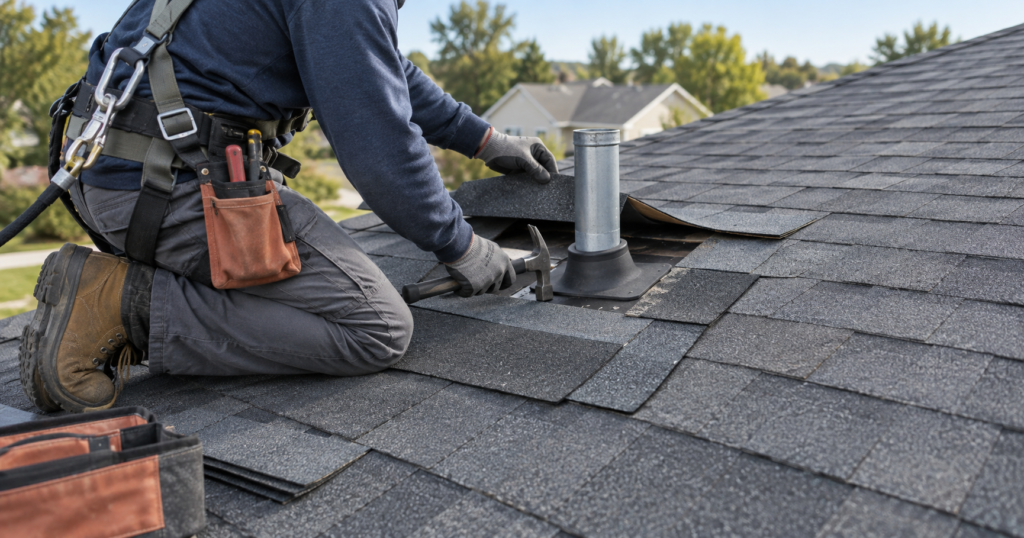
New roof signs include widespread shingle damage, recurring leaks and deterioration across several roof sections. However, one damaged area does not automatically mean you need a complete replacement.
The key question is whether the problem affects a single component or the broader roofing system. This guide focuses mainly on asphalt shingles, with additional notes for other roofing materials.
New Roof Signs: Nine Problems to Check
Consider the combination, extent and progression of symptoms. For example, scattered damage after a storm requires a different assessment from gradual deterioration across every slope.
1. Widespread curling or cracked shingles
Asphalt shingles can develop curled edges, cracks or distorted surfaces as they deteriorate. However, installation defects and other conditions can produce similar symptoms.
A small affected section may qualify for repair. By contrast, damage across multiple slopes makes replacement worth discussing with an inspector.
Ask whether nearby shingles remain flexible enough to lift and reseal during repairs. If they break during normal handling, patching becomes more difficult.
2. Missing shingles across several areas
Missing shingles expose parts of the roofing system that were intended to remain covered. Therefore, arrange an assessment even if the ceiling below looks dry.
A few wind-damaged shingles may be replaceable. However, recurring losses can point to fastening problems, failed sealing or widespread aging.
Before comparing replacement bids, review our roof repair cost guide for common repair categories.
3. Significant granule loss with exposed asphalt
Asphalt shingles have a protective granule surface. Broad bald patches or exposed reinforcement deserve professional attention, particularly when other deterioration is present.
Nevertheless, granules in a gutter do not prove that a roof has failed. New shingles can shed loose granules, and occasional shedding occurs over time.
Instead, have an inspector evaluate the remaining shingle surface and the extent of material loss.
4. Leaks that return after repairs
A recurring leak may indicate an unresolved source or an unsuccessful previous repair. Additionally, separate leaks across different roof areas can suggest broader problems.
Water can travel along framing before reaching a ceiling. Consequently, the visible stain may sit far from the actual entry point.
Request a diagnosis before approving another patch. Our roof leak repair cost guide explains the components that may need attention.
5. A newly sagging roofline
A dip or sag can involve damaged decking, framing movement or excessive loading. It requires professional evaluation because replacing shingles alone may not address the cause.
However, some uneven rooflines reflect older construction or longstanding movement. An inspector must determine whether the condition is active and whether structural expertise is needed.
6. Deteriorated roof decking
Decking supports the roof covering. Persistent moisture can damage this layer even when the exterior materials appear relatively intact.
Localized deterioration may be repairable with a limited section of decking replacement. However, extensive damage can require removing a much larger portion of the covering.
See our roof decking replacement cost guide to understand that additional scope.
7. Multiple failing flashing details
Flashing protects intersections around chimneys, walls and roof openings. A single defective detail often needs a targeted repair rather than an entirely new roof.
However, multiple failures combined with deteriorated shingles may justify broader work. The contractor should explain which components can be repaired independently.
For chimney-related problems, compare the findings with our chimney flashing repair guide.
8. Aging materials combined with visible deterioration
Roof age helps establish context, but it is not a replacement deadline. Different materials and installation conditions produce different service lives.
For example, age matters more when shingles also show widespread cracking, recurring leaks or difficult repairs. Conversely, a serviceable older roof may need continued maintenance.
Read how long a roof lasts by material before judging a roof by its installation date.
9. Repairs no longer provide a durable solution
Repeated patching becomes less useful when the surrounding material continues to fail. Likewise, brittle shingles may prevent a contractor from integrating replacement pieces reliably.
Unavailable matching materials can complicate repairs, although a color mismatch alone does not establish roof failure.
Ask for written repair and replacement options. The comparison should explain expected performance, remaining defects and work likely to be needed later.
Do These New Roof Signs Require Replacement?
The strongest case for replacement usually involves several related findings. However, the inspection should explain why a smaller repair would not provide a dependable result.
| Finding | Repair may be suitable when | Replacement deserves consideration when |
|---|---|---|
| Missing shingles | Damage is limited and adjacent shingles remain sound. | Losses recur across deteriorated slopes. |
| Roof leak | The source is isolated and accessible. | Multiple failures affect an aging system. |
| Flashing defect | The detail can be rebuilt independently. | Adjacent materials also need extensive removal. |
| Decking damage | Deterioration affects a small area. | Damage is extensive beneath the covering. |
| Old roof | Inspection finds serviceable materials. | Age accompanies widespread deterioration. |
For budget planning, use our roof replacement cost guide. Keep structural repairs and hidden damage separate when comparing estimates.
Problems That Do Not Prove You Need a New Roof
Dark streaks or surface growth
Dark streaks may be associated with algae rather than a failed roof. Moss also deserves assessment, but its presence alone does not establish replacement needs.
Instead, ask whether growth has affected the roofing material or drainage. Follow material-specific cleaning guidance because aggressive cleaning can damage the surface.
Higher energy bills
Energy bills can rise because of weather, utility rates, air leakage or HVAC problems. Therefore, higher bills alone are not reliable evidence of roof failure.
Have attic insulation, air sealing and ventilation evaluated where relevant. A roof replacement should have a documented roofing justification.
Daylight visible in the attic
Light at designed ventilation openings may be normal. However, light through damaged decking or unintended openings deserves investigation.
Similarly, an old ceiling stain does not prove that a leak is currently active. Ask whether moisture remains present and whether the original source was corrected.
What to Do When You Notice New Roof Signs
Document what you can see safely
First, take photographs from the ground and record when symptoms appeared. Note whether leaks follow rain, wind or another specific condition.
Also, collect prior repair invoices and installation documents. These records help the inspector understand the roof’s history.
Request a written assessment
Next, ask for photographs, defect locations and a clear explanation of the recommended work. The report should identify areas that could not be inspected.
For a major decision, consider an independent assessment before comparing contractor bids. Our roof inspection cost guide explains inspection options.
Compare the same scope of work
Finally, compare removal, underlayment, flashing, ventilation and cleanup across estimates. Ask how each contractor will price hidden decking damage.
For asphalt roofs, our shingle roof replacement cost guide provides additional planning context.
Frequently Asked Questions
What are the clearest signs you need a new roof?
Widespread material deterioration and recurring failures make replacement more likely. However, an inspection must establish the extent and cause before deciding on the solution.
Does one roof leak mean I need a replacement?
No. An isolated flashing defect or damaged vent seal may cause a leak. A targeted repair may work if surrounding materials remain sound.
Should I replace a roof just because it is old?
No. Age provides context, but condition and repairability matter. Use an inspection to determine whether continued maintenance or replacement is appropriate.
Can I check the roof without climbing onto it?
Yes. You can document visible conditions from the ground. However, this limited review cannot replace a professional inspection of accessible roofing components.
Do these signs apply to metal and tile roofs?
Some do, including leaks and sagging. However, metal, tile and slate require material-specific assessment because panel, tile or flashing defects may remain individually repairable.
Editorial Approach
This guide explains common visible conditions and questions to raise during an inspection. It does not diagnose an individual roof or assign a replacement deadline.
Recommendations should reflect the material, installation, local exposure and documented extent of damage.