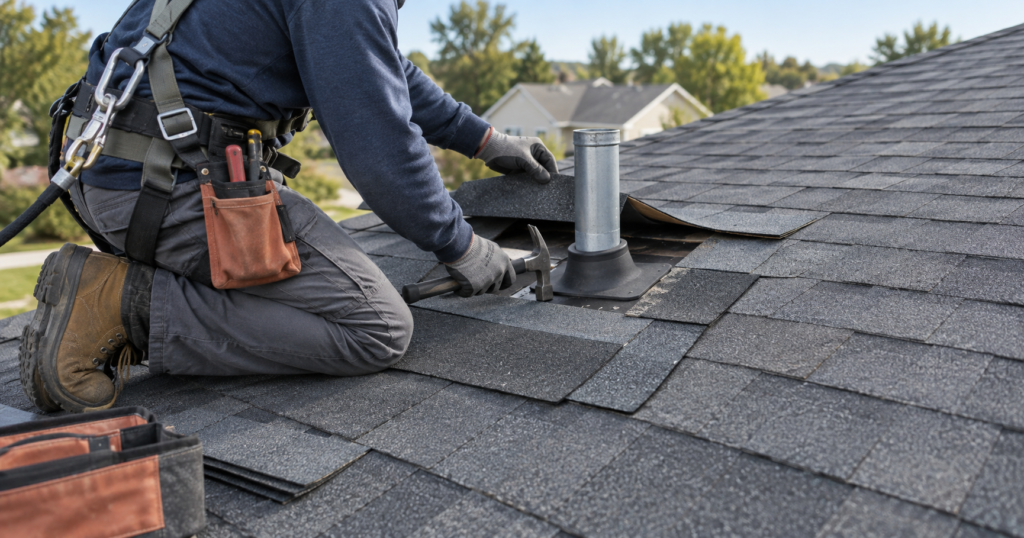
A roof leak emergency involves immediate danger or rapidly worsening damage, such as water reaching electrical equipment or a ceiling beginning to collapse. However, every active leak deserves prompt attention, even when the dripping appears minor.
The first decision is whether people can remain safely in the affected area. Next, arrange the appropriate help to control water entry and assess wet materials.
Is Your Roof Leak an Emergency?
Use the observations below to describe the situation when requesting help. However, this table cannot confirm that a building is safe to occupy.
| What you notice | Priority | Next step |
|---|---|---|
| Sparking, smoke or suspected collapse | Immediate safety emergency | Leave danger and call emergency services. |
| Water entering lights, wiring or electrical equipment | Urgent electrical hazard | Keep clear and obtain qualified electrical assistance. |
| Bulging ceiling, new sagging or falling material | Urgent safety concern | Keep people out and request immediate assessment. |
| Heavy or rapidly increasing water entry | Urgent damage control | Contact a roofer and restoration professional. |
| Small active drip without visible hazards | Prompt attention | Report the leak and arrange assessment. |
| Old dry stain with no known source | Inspection needed | Investigate the history and check for remaining moisture. |
A bucket collecting water does not establish that the ceiling above is stable. Similarly, a small stain may not show the extent of concealed moisture.
Roof Leak Emergency Warning Signs
Water reaches electrical components
Water around a ceiling light, fan or outlet requires caution. Do not touch the fixture, operate a wet switch or handle nearby electrical devices.
Also, do not approach a wet panel or cross standing water to reach it. Ask an electrician or utility professional about safe power isolation.
If there is sparking, smoke or immediate danger, leave and call emergency services.
The ceiling bulges or begins to sag
A bulge may indicate trapped water or weakened ceiling materials. Therefore, keep people and pets away from the area beneath it.
Do not puncture or press on the ceiling yourself. A professional should determine whether controlled removal is necessary and check for concealed electrical hazards.
Storm damage affects the structure
A fallen tree, displaced roof section or newly sagging roofline may involve more than a waterproofing defect. Avoid entering or remaining beneath the damaged area.
If collapse appears possible, leave the building and contact emergency services. A temporary roof covering cannot restore damaged structural support.
Water entry increases rapidly
Heavy water flow can overwhelm simple containment and spread into other rooms. Consequently, contact a roofer promptly and describe how quickly conditions are changing.
A restoration professional may also be needed to assess wet materials. However, work should begin only where access and electrical conditions are safe.
What to Do During a Roof Leak Emergency
1. Put people ahead of belongings
First, move away from unstable ceilings and wet electrical areas. Do not enter a hazardous room to retrieve furniture or electronics.
Keep children and pets out of the affected space. If safe access is uncertain, wait for professional guidance.
2. Contain a minor drip only when safe
A container may help with a small drip when there are no visible ceiling or electrical hazards. However, remain alert for changes.
Move belongings only if you can do so without entering danger. Do not climb onto the roof or enter an unsafe attic.
3. Record what happened
Next, photograph visible damage from a safe position. Record the time, weather, affected rooms and whether the flow is increasing.
These observations help professionals understand the situation. For possible sources, see our guide to why roofs leak.
4. Request the right help
Explain any electrical involvement or ceiling movement before discussing roofing repairs. This information may change which professional needs to respond first.
Also, ask whether temporary exterior protection is feasible. Wind, lightning and unsafe access may prevent immediate roof work.
Who Should You Call First?
The right first call depends on the hazard. A roofer handles water-entry defects, but electrical or structural danger can require a different response.
- Emergency services: Fire, sparking, collapse or immediate danger to people.
- Electrician or utility: Water affecting electrical components or safe power isolation.
- Roofer: Roof openings, flashing defects and temporary weather protection.
- Restoration professional: Water removal, drying and damaged interior materials.
- Structural professional: Suspected damage to framing or roof support.
If you rent, notify the property manager promptly as well. However, do not delay an emergency call while waiting for a response.
Can a Roof Leak Wait Until Morning?
There is no universal safe waiting period. Electrical hazards, ceiling movement or heavy water entry require immediate attention rather than an overnight delay.
A small drip may allow time to coordinate an appointment, depending on professional advice and conditions. Nevertheless, report it promptly and explain any changes.
If the leak stops, hidden materials may remain wet. Our guide to a ceiling leaking during rain explains delayed dripping and concealed moisture.
Drying should begin promptly
The EPA recommends drying wet materials within 24 to 48 hours to help prevent mold growth. This is a moisture-control goal, not permission to postpone repairs.
Some materials may require removal or professional drying. See the EPA guidance on moisture and mold.
What Happens After the Immediate Danger Is Controlled?
Temporary weather protection
A roofer may install a temporary covering or perform limited work to reduce water entry. However, this does not necessarily correct the underlying defect permanently.
Ask what the temporary work covers and what follow-up remains necessary. Keep that scope separate from the permanent repair proposal.
Source investigation
The visible drip may be far from the exterior opening. Therefore, the assessment should trace the water path and document the suspected cause.
Our roof inspection cost guide explains inspection options and reporting questions.
Permanent repair and interior recovery
Once the source is identified, the contractor can propose appropriate roofing work. Meanwhile, wet insulation, decking or ceiling materials may require separate treatment.
Confirm that drying and damaged-material assessment are included somewhere in the recovery plan. Painting should wait until the moisture problem is resolved.
Does Emergency Service Mean You Need a New Roof?
No. Urgency describes how quickly the situation needs attention, not the size of the permanent roofing project.
A failed vent boot can create an urgent indoor problem while requiring a localized repair. Conversely, widespread storm damage may need a broader solution.
Compare the findings with our roof repair vs replacement guide before approving extensive work.
What Should an Emergency Repair Estimate Include?
Ask the company to separate immediate response from permanent repairs. This makes the scope easier to understand and compare.
- Callout or after-hours charge, if applicable.
- Temporary covering and installation.
- Inspection or diagnostic work.
- Proposed permanent repair.
- How hidden damage will be documented and priced.
- Whether drying and interior restoration are excluded.
For background, read our roof leak repair cost guide. Actual emergency pricing depends on access, weather and the work required.
Roof Leak Emergency FAQs
Is every roof leak an emergency?
Every active leak needs prompt attention. However, immediate danger depends on electrical involvement, structural conditions and how rapidly the situation is worsening.
Should I call 911 for a roof leak?
Call 911 when there is immediate danger, such as fire or suspected collapse. An ordinary contained drip generally requires a roofer rather than emergency services.
Is it safe to sleep beneath a leaking ceiling?
Avoid using the affected area until its condition is assessed. Visible dripping does not show whether water has weakened concealed ceiling materials.
Can a roofer repair the roof during a storm?
Weather and access determine whether work can proceed safely. A company may need to wait for safer conditions before installing temporary protection.
What if the roof stops leaking on its own?
The opening may still exist, and concealed materials may remain wet. Arrange assessment rather than assuming the problem has resolved.
Editorial Approach
This guide distinguishes immediate hazards from roofing repair needs. It cannot confirm the safety of an individual building remotely.
The drying guidance references the EPA. On-site conditions should guide emergency response, access and permanent repairs.